← Back to projects

Machine Learning

InvenIQ

Demand forecasting & inventory intelligence for quick-commerce
Sep – Oct 2025View source
Machine Learning
0.88
R² (variance)
91.4%
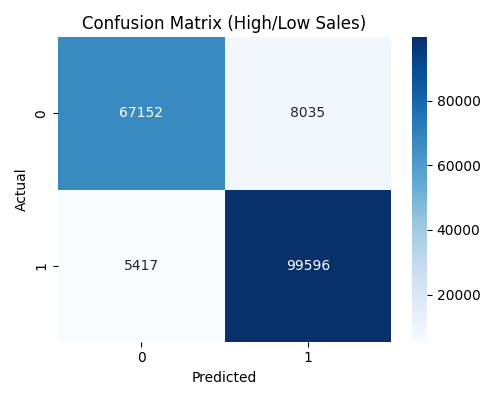
Stockout Acc.
22%
Cost cut

Overview

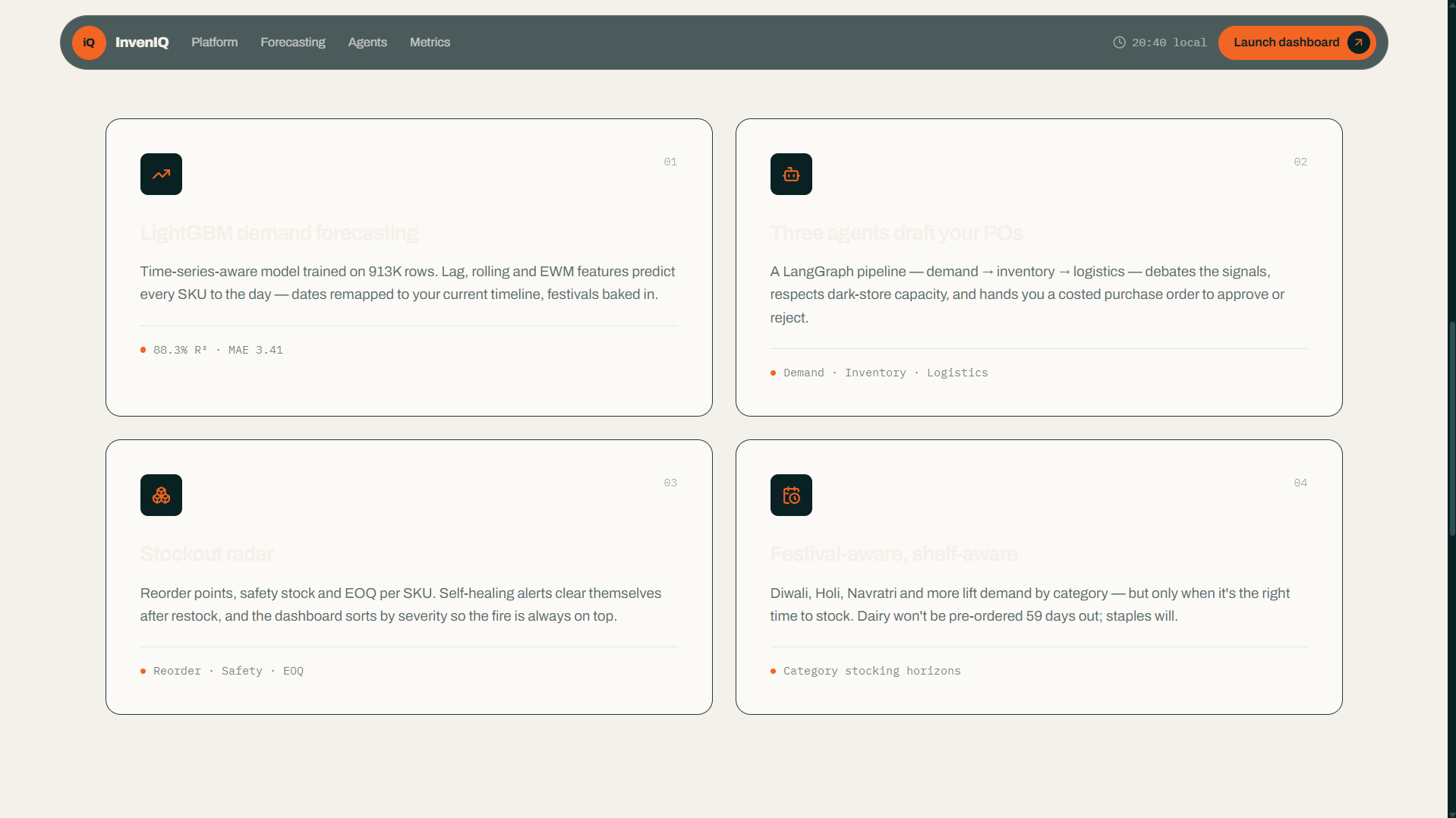
An end-to-end demand-forecasting and inventory system for Blinkit-style Indian dark stores — LightGBM forecasting wired into a multi-agent LangGraph pipeline and a real-time dashboard.

  • Trained on 5 years of Indian FMCG daily sales (913K rows) with 70+ engineered features — lag periods, rolling windows, EWM — and festival-aware post-processing for Diwali, IPL, Navratri and more.

  • Serves 10 dark stores and 50 SKUs with category-aware stocking windows (dairy 3-day, snacks 14-day, staples 30-day), safety-stock and EOQ optimization, and auto-resolving reorder alerts.

  • A three-agent LangGraph pipeline (Demand → Inventory → Logistics) explains every recommendation in plain language and drafts purchase orders for manager approval.

Tech stack

  • Python
  • LightGBM
  • Optuna
  • Pandas
  • Scikit-learn
  • LangGraph
  • Next.js
  • Groq
  • Gemini

Screens & results

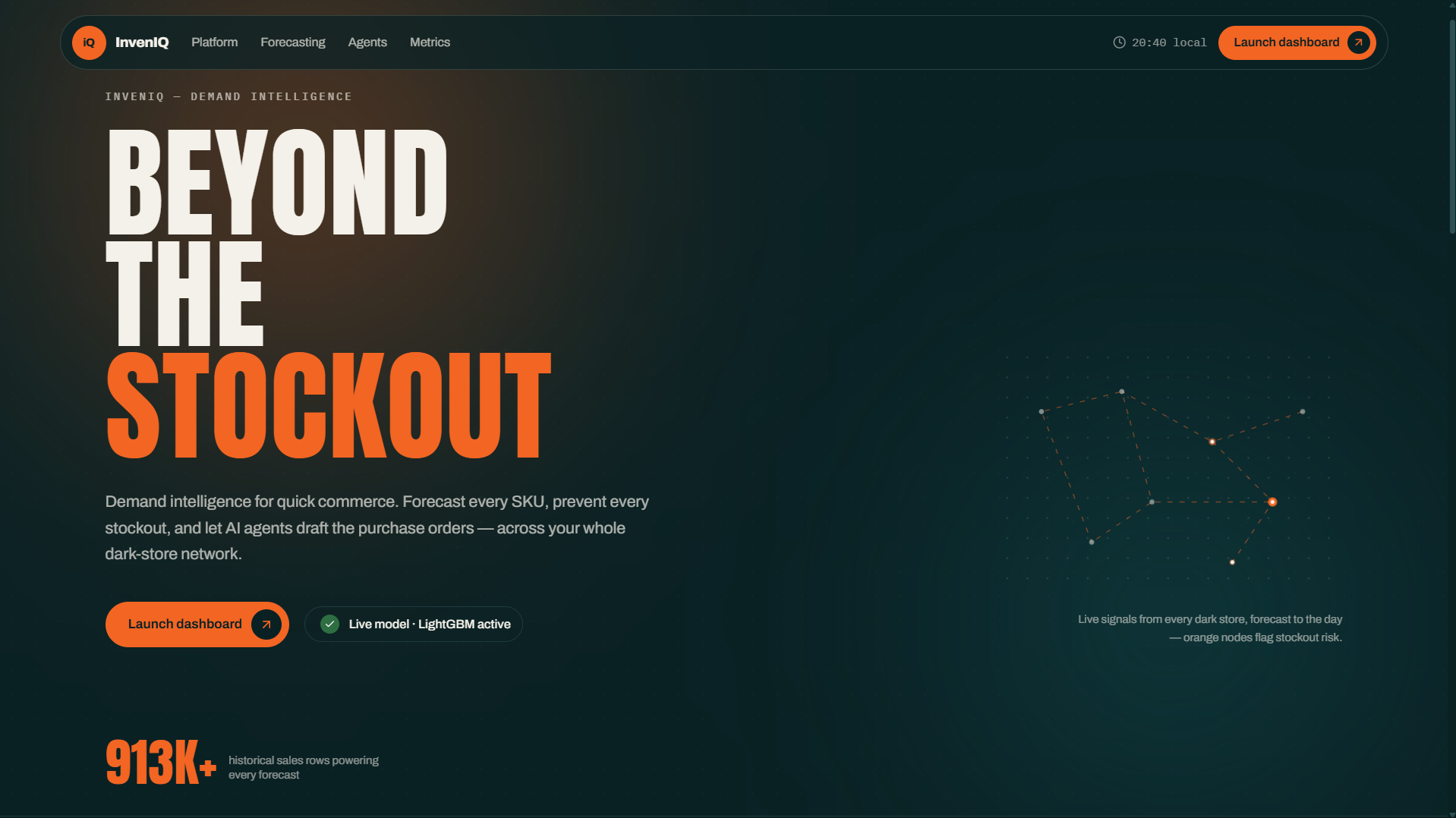
InvenIQ landing — demand intelligence for quick-commerce, forecasting every SKU across the dark-store network.
Platform overview — LightGBM forecasting wired into a multi-agent LangGraph pipeline.
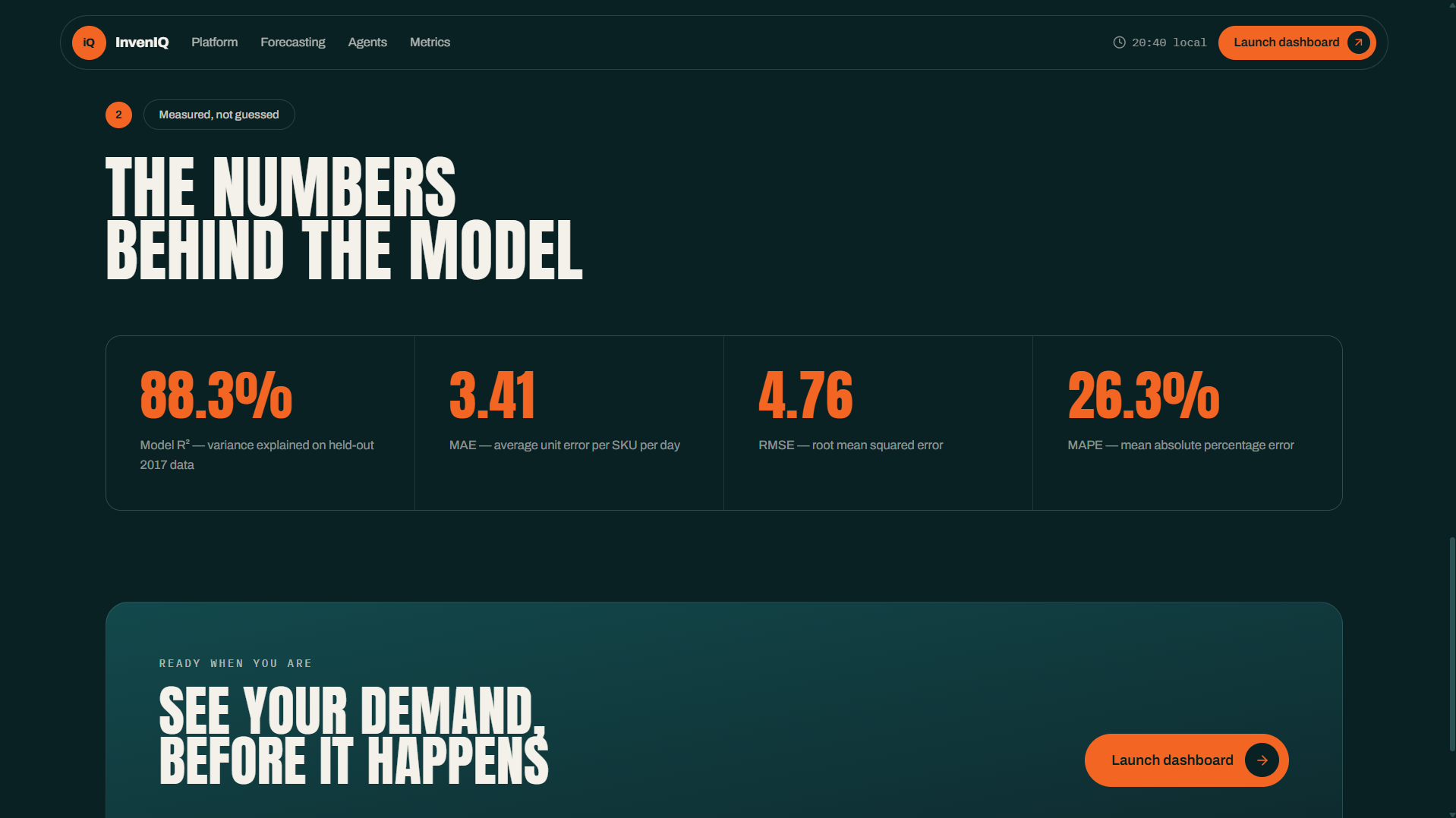
Model scorecard — 88.3% R², MAE 3.41, RMSE 4.76 across 10 dark stores and 50 SKUs.
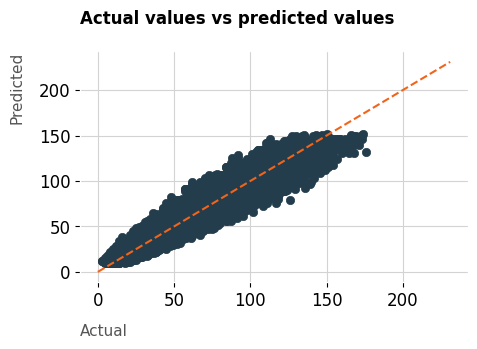
Actual vs. predicted demand — LightGBM tracking daily sales with confidence bands.
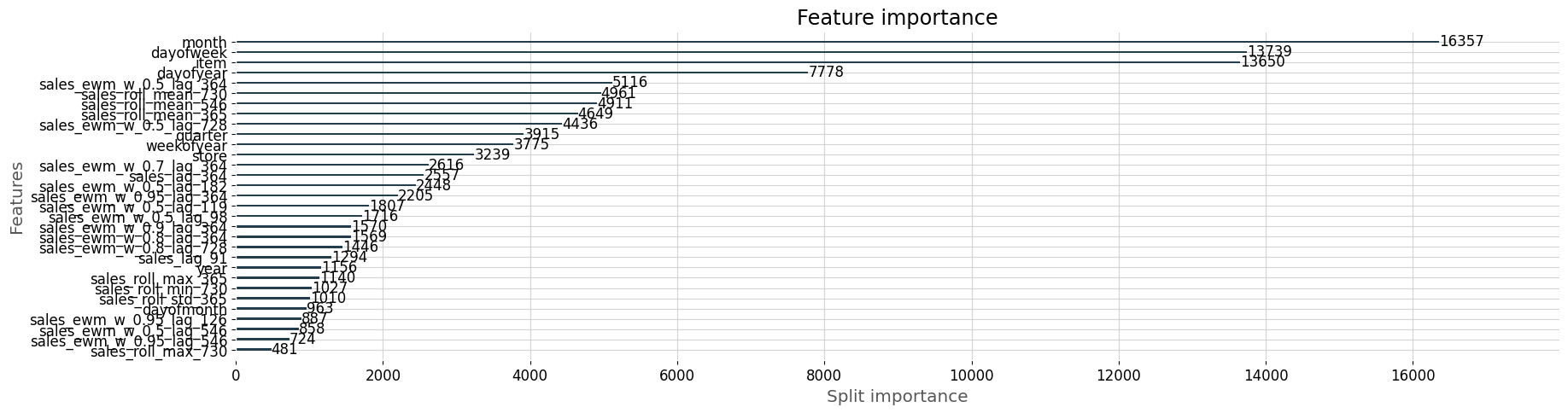
Top engineered features driving the forecast (lags, rolling windows, calendar signals).
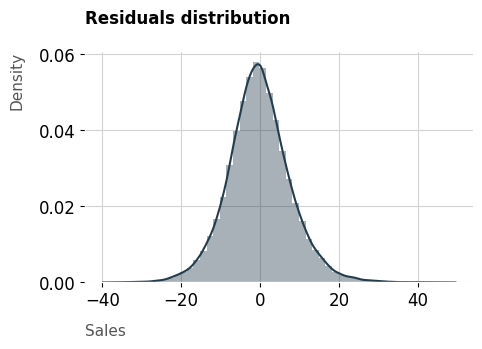
Residual distribution — errors centred near zero, no systematic bias.
Stockout-risk classifier confusion matrix — 91.4% accuracy.

Next project

Multi-Tenant WhatsApp Agent